When gold is sold at a local shop, most sellers assume the story ends there. Cash changes hands, the jewelry disappears behind a counter, and the transaction feels complete. In reality, selling gold is only the first step in a long global movement. Scrap gold travels through a complex international system before it becomes refined bullion, industrial material, or investment-grade metal. goldcalculatorr.com
This article maps the real journey of scrap gold after it leaves the seller's hand. It explains where it goes, why it moves across borders, who controls each stage, and how value changes along the way.
Why Scrap Gold Moves Instead of Staying Local
Scrap gold rarely stays in the city or country where it is sold. The reason is simple: refining gold efficiently requires scale, infrastructure, and specialization. Local buyers are designed to collect gold, not process it fully. Refining demands advanced equipment, chemical handling, regulatory approvals, and high-volume processing. Only a small number of global centers can do this profitably.
Step 1: Local Collection Points
The journey begins at local collection points. Common entry points include pawn shops, jewelry stores, cash-for-gold buyers, and small bullion dealers. At this stage, gold exists in mixed forms — different karats, multiple jewelry types, and items with solder, stones, and alloys. Local buyers focus on aggregation, not refinement.
Step 2: Regional Aggregation Hubs
Once enough gold is collected, it is sold onward in bulk. Refiners require minimum quantities, mixed gold must be sorted, and transport costs must be justified. Regional aggregators consolidate gold from dozens or hundreds of local buyers.
What Happens at Aggregation Level
- Initial sorting by karat
- Removal of obvious non-gold materials
- Bulk packaging
- Documentation and compliance checks
This is where gold begins to lose its individual identity and becomes part of a mass flow.
Step 3: Cross-Border Export of Scrap Gold
Scrap gold often leaves the country where it was sold. Reasons for export include lower refining costs abroad, specialized refining expertise, favorable regulations, and better recovery rates. Many countries collect scrap gold but do not refine it domestically.
Major Global Scrap Gold Refining Regions
Scrap gold flows toward a small number of refining centers that dominate global recycling. Key regions include Switzerland, India, China, Turkey, and the United Arab Emirates. Each plays a different role in the global gold ecosystem.
Switzerland: High-Purity Refining Center
Switzerland handles a large share of the world's high-quality refining. It is known for extremely high refining standards, advanced purity verification, and trusted bullion production. Gold refined here is often converted into investment-grade bars, central bank reserves, and institutional bullion. Scrap gold entering Switzerland usually leaves as near-perfect purity gold.
India: Jewelry Recycling Powerhouse
India is one of the largest scrap gold processors in the world. Its massive jewelry manufacturing industry, high domestic gold demand, and skilled labor for re-alloying make it a prime destination. Much of the scrap gold refined here re-enters the market as new jewelry rather than bullion.
China: Industrial and Strategic Use
China processes large volumes of gold for industrial and strategic purposes, including electronics manufacturing, industrial components, and state reserves. Scrap gold refined in China often disappears from open markets and enters long-term use.
Turkey and the UAE: Trade and Redistribution Hubs
These regions act as connectors rather than final destinations. They receive scrap gold from Europe, Africa, and Asia, refine or semi-refine it, then redistribute gold to manufacturers. These hubs benefit from geographic position and favorable trade regulations.
Step 4: Refinery Intake and Processing
Once scrap gold reaches a refinery, the real transformation begins. The intake process includes weight verification, sampling and testing, batch classification, and loss estimation. At this stage, gold from many countries is mixed into large refining batches.
Why Scrap Gold Is Mixed at Refineries
Refineries do not process individual seller gold. Mixing improves efficiency, reduces cost per unit, and stabilizes purity variation. Once mixed, gold can no longer be traced to its original seller.
Step 5: Refining and Purification
Refining separates pure gold from all other materials. Methods used include fire assay, chemical separation, and electrolysis. Each method aims to recover as much gold as economically possible.
Step 6: Conversion Into Final Forms
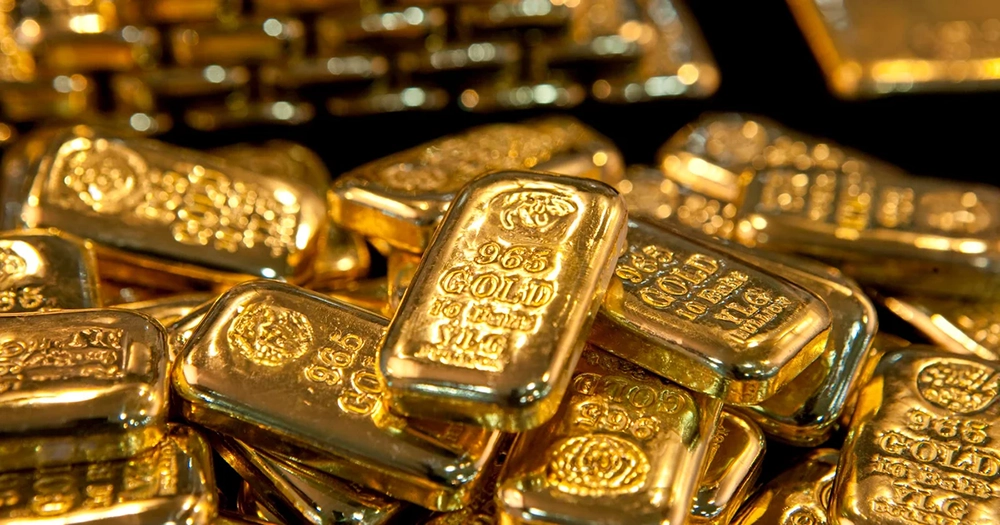
After refining, gold is reshaped into market-ready formats. Common final outputs include bullion bars, jewelry-grade gold, industrial gold components, and investment products. This is the stage where gold regains full market value.
How Value Changes Along the Flow
Value does not increase smoothly through the chain — it contracts and expands at different stages.
| Stage | Value Trend |
|---|---|
| Seller to local buyer | Decrease |
| Aggregation | Stable |
| Export | Slight decrease |
| Refining | Increase |
| Final product | Maximum |
The seller experiences the lowest value point in the entire system. Sellers are paid before refining certainty, purity confirmation, and market resale — compensated early, which transfers risk to buyers.
The Hidden Economics of Global Gold Flow
Global scrap gold movement exists because labor costs differ by region, environmental regulations vary, refining expertise is centralized, and moving gold across borders is often cheaper than refining locally.
Environmental and Regulatory Impact
Refining gold produces waste, which is why it tends to be centralized. Centralized refining allows easier regulation enforcement, better waste management systems, and lower environmental risk exposure. Many countries prefer exporting scrap rather than managing refining domestically.
Can Sellers Track Where Their Gold Goes?
In practice, no. Once gold enters aggregation, it is mixed, loses its individual identity, and becomes part of a global pool. Tracking individual gold is not feasible after the first sale.
Common Myths About Scrap Gold Flow
Myth 1: Gold Is Resold Locally
Most scrap gold leaves the local market and is exported for efficient refining.
Myth 2: Gold Is Immediately Reused
Gold often sits in transit or storage for months before reaching its final destination.
Myth 3: Jewelry Becomes Jewelry Again
Many jewelry items become bullion or industrial gold rather than returning to jewelry form.
Why Understanding the Gold Flow Matters
Understanding where gold goes helps sellers accept realistic payouts, understand buyer deductions, and avoid emotional pricing expectations. It reveals why offers differ and why local buyers cannot pay refinery prices.
Frequently Asked Questions
Final Thoughts
Scrap gold does not vanish after it is sold. It enters a global system that spans countries, industries, and markets. From local shops to international refineries, gold moves through layers of aggregation, transport, and transformation before reaching its final form.
Sellers operate at the very beginning of this chain, where risk is highest and certainty is lowest. That is why payouts feel reduced compared to final gold prices. Understanding the global flow of scrap gold replaces confusion with clarity and sets realistic expectations.
Gold is global, mobile, and constantly recycled. Once sold, it becomes part of a worldwide circulation that few sellers ever see, but everyone indirectly participates in.